Four ways
to tell the same story.
The angle stays the same; the staging changes. Producing all four costs the same as producing the same one four times, and it tells you which one converts.
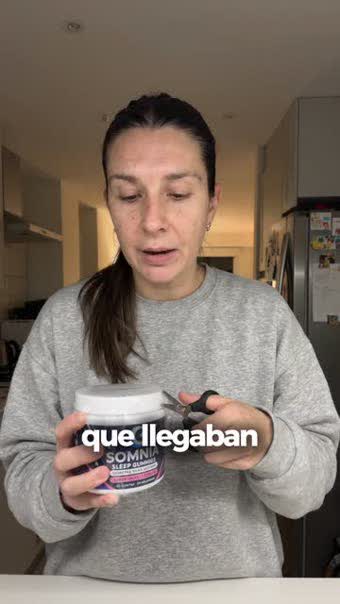

UGC
One person talking to the camera with the product in hand, in a real living room or bathroom. It's the format that best passes for organic content and the one that handles the most volume.
- ✓ Best for: testing angles and high volume
- ✓ Length: 30, 40 or 60 seconds
- ✓ On camera: one person
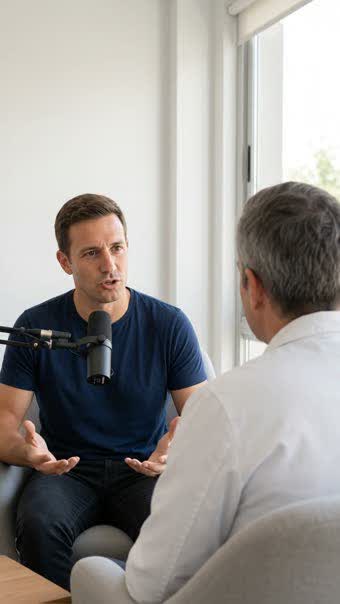
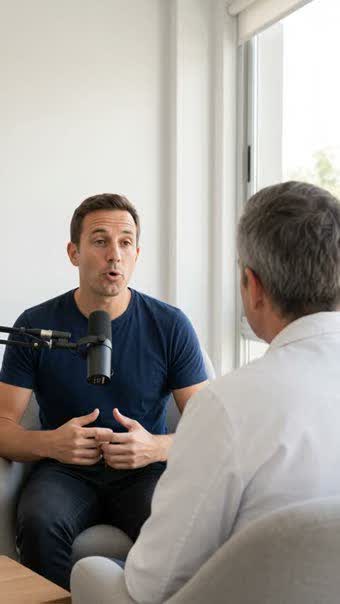
Podcast
Armchair, boom mic and studio set. The same message sounds like an informed opinion instead of an ad. It works well in categories where buyers are wary.
- ✓ Best for: categories with objections or skepticism
- ✓ Length: 40 or 60 seconds
- ✓ On camera: one person, studio set


Dualcast
Two people talking in a wide shot. One raises the doubt your buyer has and the other answers it. The objection and its answer play out in front of the viewer instead of just being claimed.
- ✓ Best for: overcoming the main objection
- ✓ Length: 40 or 60 seconds
- ✓ On camera: two people

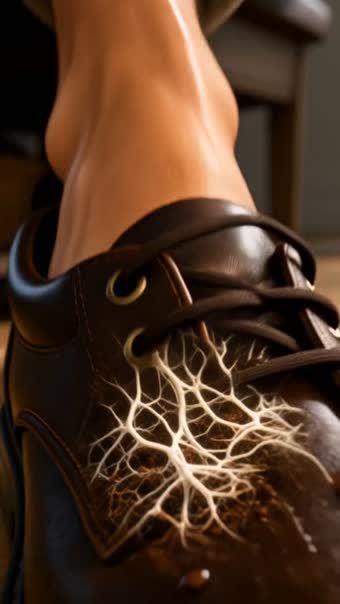
Animation
No actors. Illustrated scenes with transitions, to explain a mechanism, show what happens inside the body or tell something that can't be filmed. It also works when the category doesn't allow testimonials.
- ✓ Best for: explaining how a product works
- ✓ Length: 30 or 40 seconds
- ✓ On camera: nobody
Which one to choose
| Format | Best for | Length | On camera |
|---|---|---|---|
| UGC | Testing angles, high volume | 30 / 40 / 60 s | 1 person |
| Podcast | Skeptical categories | 40 / 60 s | 1 person |
| Dualcast | Overcoming the main objection | 40 / 60 s | 2 people |
| Animation | Explaining a mechanism | 30 / 40 s | Nobody |
They all cost the same. Price goes by quantity, not by format.
All four formats come with any plan. Nobody pays more for ordering a podcast instead of a UGC.
Try all four
on the same script.
It's the cheapest way to find out which one converts for you.